
THE FUTURISTS

What happens when the software you use starts acting independently? Harry Glorikian calls this the invisible interface, and in this episode he unpacks the implications of unseen agency and autonomy in the future workforce. Topics: the personal interface layer; the memory war; who owns the context that makes a personal interface valuable; proofseconds; the four trust signals that determine whether human users are willing to delegate to machines; how occupational dimensionality determines whether an employer will automate an entire job or just parts of it.
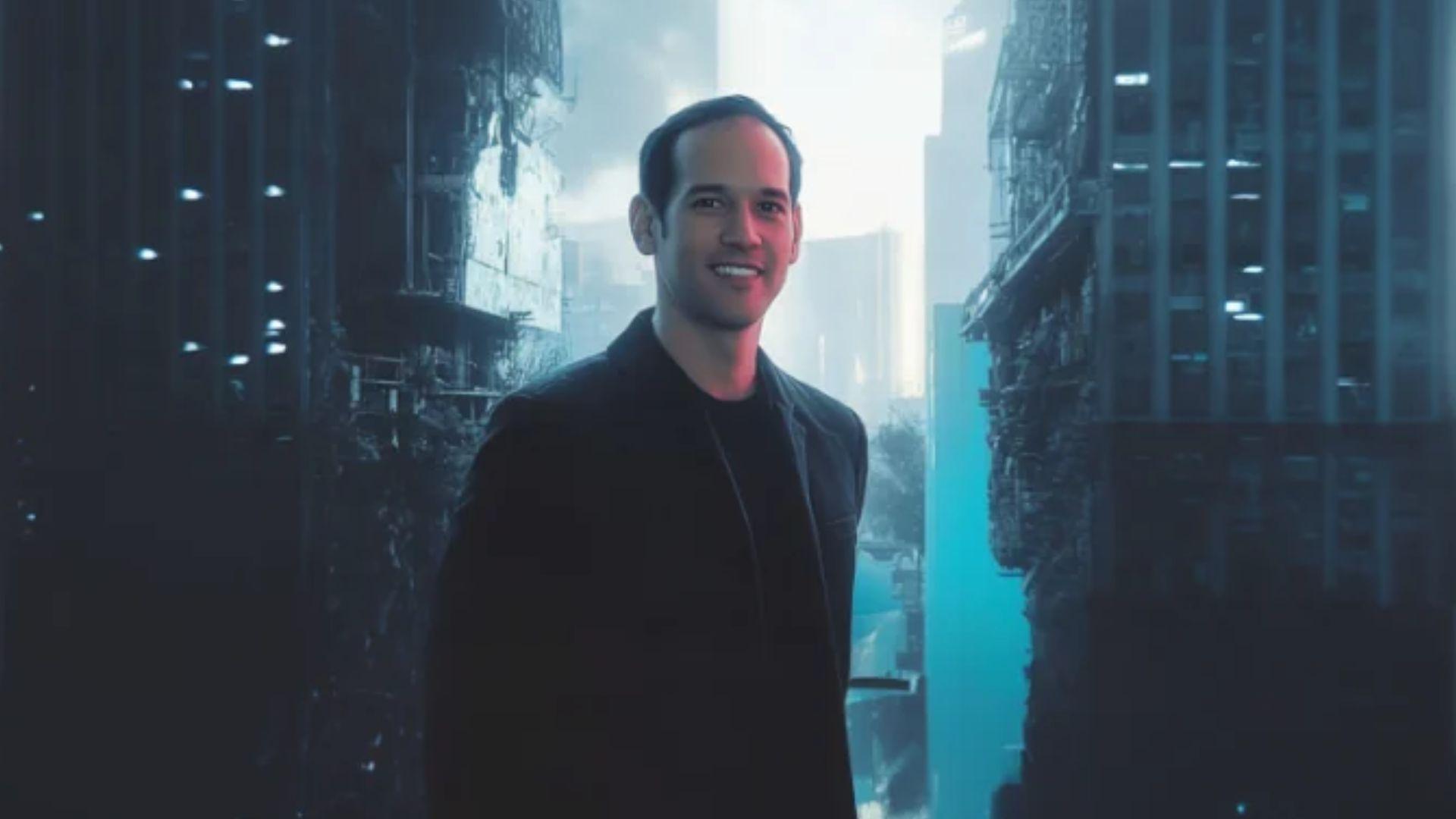
In this episode of The Futurists, Motion Picture Director Ian Truitner joins host Rob Tercek to discuss how generative AI could reshape film production, from bypassing studio gatekeepers to enabling iterative revisions and lower-cost proof-of-concept projects. Drawing on Truitner’s military combat-photography experience and three years of AI experimentation, they examine why filmmaking craft and human judgment still matter, how AI changes creative control, and what production workflows need to preserve consistency. Ian and Rob use traditional filmmaking production values as a gauge to measure where AI video tools fall short, from continuity and emotional subtlety to the need for human editorial judgment. And weigh AI’s potential to reshape production costs, film jobs, training pathways, and environmental impact, and consider how studios may adapt.

Paul Osterman, MIT labor economist and author of Disposable Workers: The Transformation of Employment , tells Rob Tercek about the fastest-growing category of the US workforce in the age of artificial intelligence. According to Osterman, a rising number of employers prefer to hire three categories of “disposable workers” with no long-term stake in the company. Today, such workers comprise more than 35% of the entire US workforce. The employers get the benefit of flexibility, and they push the risk and uncertainty onto the workforce. This interview covers the social, political, and organization consequences of the shift. And it anticipates how the deployment of AI will intensify the trend.

This week Brett and Robert are joined by Futurist, Founder and Author Terence Mauri as he gets ready to launch his new book, The UPside of DisrUPtion. We talk long term disruptive potential of AI, how it will impact employment, economies and corporations. But we also get into future proofing strategies for businesses and individuals alike. One thing is for sure, you’re going to want to be as adaptable as possible for the future that is coming! Terence's Bio - https://www.terencemauri.com/#Bio

Technology strategist Shelly Palmer returns to The Futurists to demystify abstruse concepts of quantum computing in practical terms with his characteristically sharp insights about artificial intelligence. Shelly explains: why code and content will be free; why quantum encryption won’t create jobs for humans; what happens when Moore’s law compounds with Metcalfe’s and Cooper’s Laws; why we can bank on the proliferation of good ideas; and how to separate hype from reality in the realm of Big Tech research.

The global supply chain is the most complicated thing that humanity has invented with more than 1 million companies in 209 nations trading 90% of manufactured goods via maritime transport. Now, thanks to climate change, extreme weather events and geo-political strife, it’s growing geometrically more complex. Brett King and Rob Tercek discuss the implications for domestic politics, employment and innovation.
Twitter @Futuristpodcast
Facebook @FuturistPodcast
Instagram @Futuristpodcast
Youtube @TheFuturistsPodcast
Soundcloud @TheFuturistsPodcast